
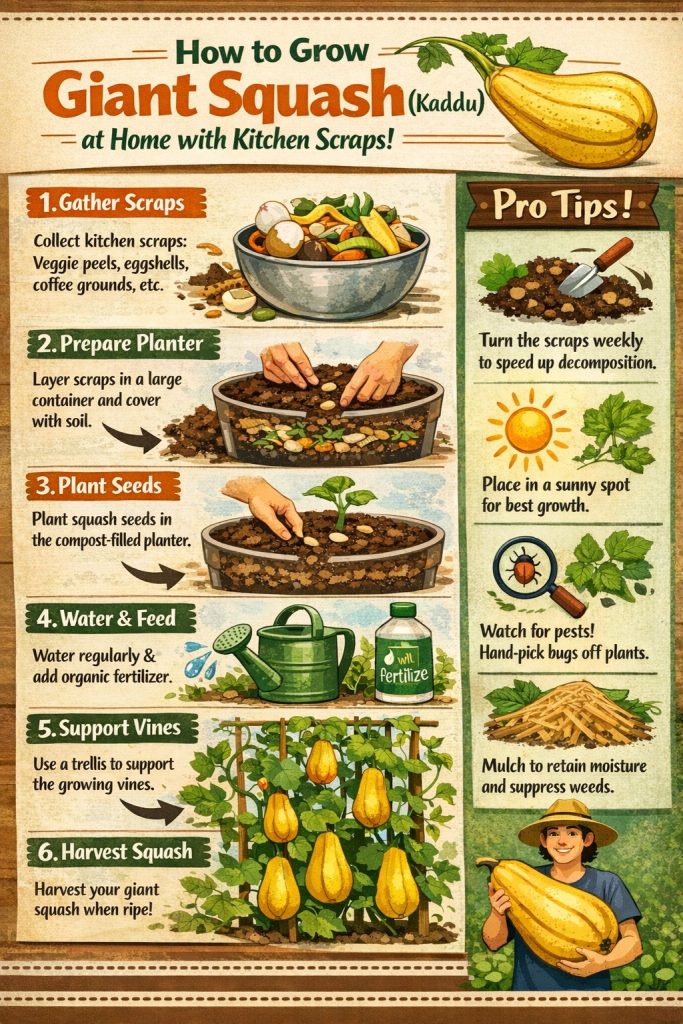
How to Grow Giant Squash (Kaddu) at Home from Kitchen Waste
Growing your own vegetables at home is one of the most satisfying things you can do. Imagine picking a fresh, giant kaddu (squash) from your own garden or terrace and cooking a delicious meal for your family. The best part is that you don’t even need expensive fertilizers. You can grow healthy squash plants using simple kitchen waste that most people throw away every day.
Kitchen scraps such as vegetable peels, fruit leftovers, eggshells, and used tea leaves can become natural fertilizer for plants. These scraps slowly break down in the soil and provide nutrients that help plants grow faster and stronger.
In this guide, you will learn step-by-step how to grow giant squash (kaddu) at home using kitchen waste, even if you are a beginner.
Why Grow Squash (Kaddu) at Home?
Squash is one of the easiest vegetables to grow. The plant grows quickly and produces large fruits when it gets enough sunlight and nutrients.
Here are some benefits of growing kaddu at home:
-
Fresh and chemical-free vegetables
-
Saves money on groceries
-
Reduces kitchen waste
-
Improves soil health naturally
-
Perfect for terrace or backyard gardens
Even a small garden or balcony can grow a large squash plant.
Kitchen Waste You Can Use for Growing Squash
Before planting squash, start collecting useful kitchen scraps. These scraps will turn into natural compost.
Common kitchen waste for gardening:
-
Vegetable peels (potato, carrot, cucumber)
-
Fruit peels (banana, orange, apple)
-
Eggshells
-
Used tea leaves
-
Coffee grounds
-
Leftover vegetable stems
-
Crushed dry leaves
Avoid using oily food, meat, or salty leftovers because they can attract pests.
Step 1: Prepare Natural Compost from Kitchen Waste
The first step is to turn your kitchen waste into compost.
Simple Compost Method
-
Take a large pot, bucket, or container.
-
Put a layer of soil at the bottom.
-
Add kitchen scraps.
-
Cover the scraps with another layer of soil.
-
Repeat these layers until the container is full.
After 2–3 weeks, the scraps will slowly decompose and become nutrient-rich compost.
Tip: Mix the compost once every week to help it break down faster.
Step 2: Choose a Good Place for the Plant
Squash plants love sunlight. Choose a location where the plant can receive at least 6–8 hours of sunlight daily.
Good places include:
-
Terrace gardens
-
Backyard soil
-
Large containers or grow bags
-
Open balcony areas
Squash plants spread widely, so make sure there is enough space for the vines to grow.
Step 3: Plant the Squash Seeds
Now it’s time to plant the seeds.
How to Plant Squash Seeds
-
Fill a large pot or grow bag with soil mixed with compost.
-
Make small holes about 1 inch deep.
-
Put 2–3 squash seeds in each hole.
-
Cover them lightly with soil.
-
Water the soil gently.
Seeds usually start sprouting within 5–10 days.
Step 4: Water the Plant Properly
Squash plants need regular watering but not too much.
Watering tips:
-
Water once daily in summer.
-
Keep the soil moist but not flooded.
-
Water the plant early in the morning.
Too much water can damage the roots, so always check the soil before watering.
Step 5: Support the Growing Vines
Squash plants grow long vines that spread across the ground. To help them grow properly, you can give them support.
You can use:
-
Wooden sticks
-
Garden trellis
-
Bamboo support
-
Rope tied to a wall
Supporting the vines helps the plant produce bigger and healthier squash fruits.
Step 6: Protect the Plant from Pests
Sometimes insects may attack the plant.
Natural pest control methods:
-
Spray neem oil on leaves
-
Remove insects by hand
-
Sprinkle crushed eggshells around the plant
-
Plant marigold flowers nearby to repel pests
These methods keep the plant healthy without using chemicals.
Step 7: Harvest Your Giant Squash
After about 60–90 days, the squash will grow large and ready to harvest.
Signs that the squash is ready:
-
The fruit becomes large and firm
-
The skin becomes hard
-
The color becomes deep yellow or orange
Cut the squash carefully with a knife, leaving a small stem attached.
Congratulations! You have successfully grown giant kaddu at home using kitchen waste.
Pro Tips for Growing Bigger Squash
Follow these tips to grow extra large squash:
-
Use compost regularly every 2–3 weeks
-
Add crushed eggshell powder for calcium
-
Give plenty of sunlight
-
Remove weak leaves
-
Grow the plant in large containers
Healthy soil and sunlight are the secret to giant vegetables.
Final Thoughts
Growing squash at home from kitchen waste is a simple and eco-friendly way to start gardening. Instead of throwing away vegetable peels and food scraps, you can turn them into powerful natural fertilizer.
This method saves money, reduces waste, and helps you grow fresh organic vegetables right at home.
Even beginners and children can enjoy this process. Once you grow your first giant squash, you will feel proud of your small garden and the healthy food it produces.
Start collecting kitchen scraps today and turn them into a beautiful squash garden.